International Cancer Week: Federal Government Reaffirms Commitment to Resilient Healthcare Systems
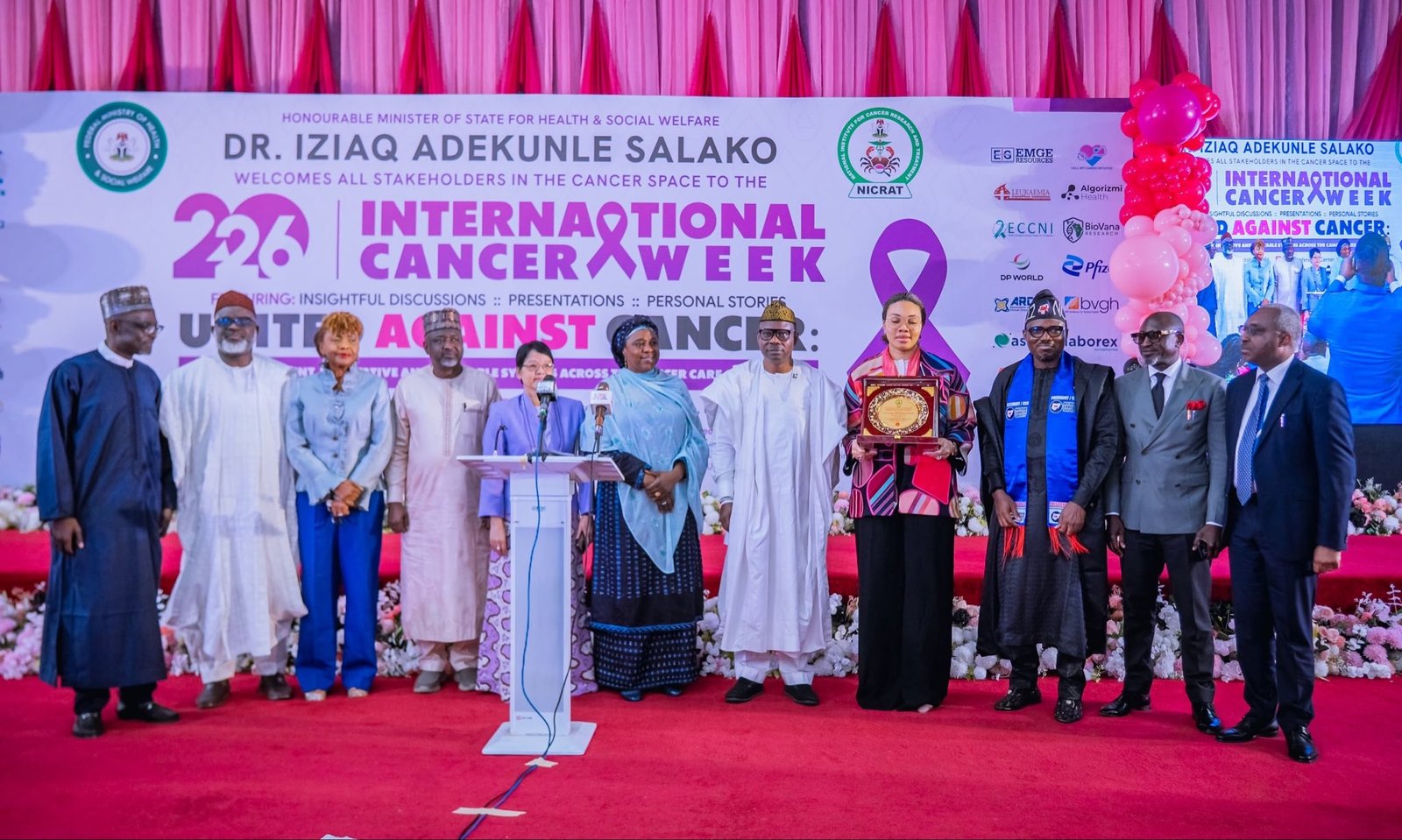
The Federal Government has reaffirmed its commitment to revolutionizing cancer care across Nigeria by building resilient, innovative, and equitable healthcare systems designed to support patients through every stage of diagnosis and treatment. Minister of State for Health and Social Welfare, Dr. Iziaq Adekunle Salako, stated this while officially opening the 2026 International Cancer Week in Abuja. Organized by the National Institute for Cancer Research and Treatment, an agency of the Federal Ministry of Health, the annual conference operates under the theme: “United Against Cancer: Building Resilient, Innovative and Equitable Systems Across the Cancer Care Continuum.” The gathering brings together medical experts, policymakers, international partners, and patient advocate groups to formulate actionable health strategies. Dr. Salako explained that the ministry is actively driving the National Cancer Control Plan 2026–2030 through the broader Nigeria Health Sector Renewal Investment Initiative framework. The strategic objective focuses on achieving at least a 30 percent overall reduction in national cancer mortality and incidence rates by 2030 through enhanced clinical workflows and early intervention. A primary highlight of the national strategy involves the approved procurement and installation of 35 state of the art Linear Accelerators across selected tertiary health centers over the next three years. This massive equipment roll-out will accompany the physical development and commissioning of specialized cancer centers of excellence designed to provide comprehensive radiation and chemotherapy treatments. On the preventative front, the government has established eight dedicated NICRAT Preventive Oncology Clinics distributed strategically across all six geopolitical zones. Massive nationwide immunization campaigns have successfully administered the HPV vaccine to over 18 million young girls aged 9 to 14, targeting the complete elimination of cervical cancer in line with global health objectives. The minister underscored that technological innovation, clinical research, and precise health data management will serve as central pillars for the national cancer response moving forward. Advanced digital health platforms, artificial intelligence, telemedicine networks, molecular diagnostics, and national cancer registries are currently being deployed to refine diagnostic accuracy and streamline individualized patient care. To alleviate the catastrophic financial burden associated with long term cancer care, the government is expanding the financial reach of the National Cancer Health Fund. This financial safety net ensures low income citizens receive essential funding support, preventing financial hardship from forcing vulnerable patients to abandon life-saving medical treatments midway. The Abuja gathering follows Nigeria’s outstanding leadership presentation at the World Cancer Congress in Hong Kong, where the national delegation presented the 2026–2030 blueprint as a benchmark model. Notably, Nigerian medical pioneer Dr. Zainab Shinkafi Bagudu was announced as the first African President of the Union for International Cancer Control during the global summit. Dr. Salako closed his opening address by calling on civil society, private corporate bodies, and international donor organizations to pool resources with government institutions to expand cancer screening centers. He reminded citizens that early detection remains the most cost effective defense against cancer, urging all Nigerians to access regular medical checkups at nearby primary healthcare centers. By: Asiwaju Adekunle Saheed
Continue Reading