
Zulum Writes A ₦622 Million Cheque So No Borno Student Misses Their Exam Over Money

By Asiwaju Adekunle Saheed The Borno State Government has presented a cheque of ₦622,308,300 to the National Examinations Council office in Maiduguri, covering 2026 Senior Secondary Certificate Examination fees for 27,599 final year students in public schools across the state. Commissioner for Education, Science, Technology and Innovation, Engr. Lawan Abba Wakilbe, made the presentation on behalf of Governor Babagana Umara Zulum, in continuation of a state policy running since 2019 that subsidises 75 percent of WASSCE, SSCE and NABTEB fees for eligible students. According to the Commissioner, a total of ₦1,195,661,872.50 has been committed in 2026 alone toward WASSCE, SSCE, SISE and NABTEB fees, pushing the state’s cumulative investment in external examination fees since 2019 to ₦5,987,567,125.00, benefiting 193,396 students. Wakilbe said the 2026 SSCE, conducted across all 24 Local Government Areas of the state, proceeded largely smoothly, despite a security incident in Lassa on June 29 in which 36 learners and one teacher, including a candidate sitting the examination at the time, were abducted. He prayed for their safe and swift return. He said the gesture reflects the governor’s unwavering commitment to ensuring no child in Borno State is denied the chance to sit for final examinations because of financial hardship, noting that nearly ₦6 billion has been invested since 2019 to keep children in school and in the examination hall. The Commissioner said thoughts remain with the affected learners and their teacher from Lassa, with continued prayers for their immediate return to their families and classrooms. He commended NECO officials, local government chairmen, education secretaries, principals, teachers, parents and security agencies for their roles in the successful conduct of the examination, and pledged continued state support toward the planned rollout of Computer Based Test examinations in 2027.

Continue Reading

NITDA, UNIPORT Wrap Up Tech Stars Training, Arm Students With AI and Coding Skills

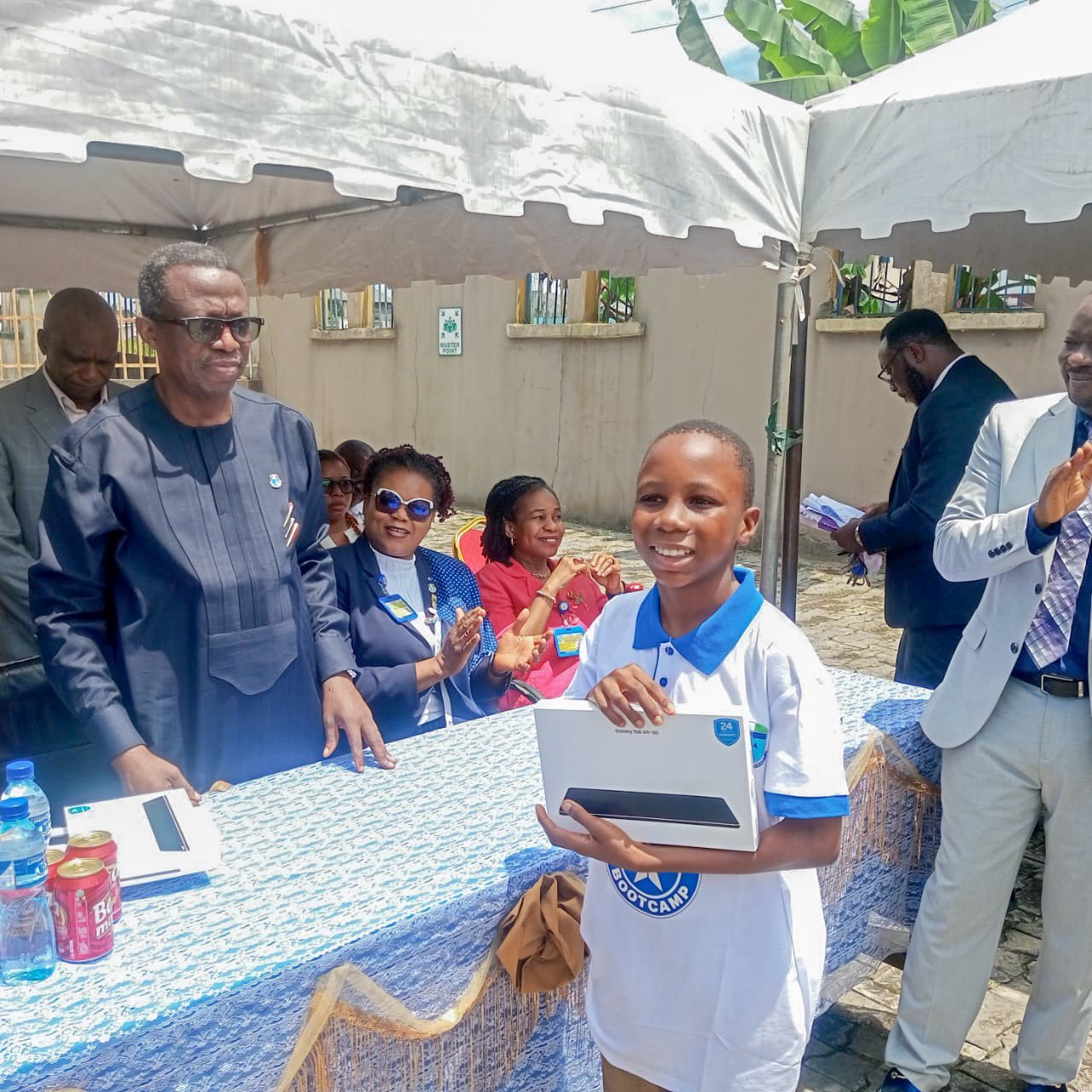
The National Information Technology Development Agency, in partnership with the Centre for Information and Telecommunication Engineering at the University of Port Harcourt, has concluded the CITE Tech Stars 2026 programme in Port Harcourt, adding to four other training sessions completed in Kwara, Jigawa, Gombe and Kano States. The one month intensive ICT training was designed to equip primary, junior and senior secondary school students with foundational skills in artificial intelligence, robotics, coding and data science, preparing them to participate meaningfully in the digital economy as future innovators. Participants in Port Harcourt received certificates recognising their successful completion of the training, with outstanding performers across different categories rewarded with laptop computers and tablets. Vice Chancellor of the University of Port Harcourt, Prof Chike Princewill Chike, congratulated the participants at the closing ceremony and encouraged them to apply their newly acquired skills to develop practical solutions to real world socio-economic challenges, urging them to keep exploring technology and contributing to Nigeria’s digital transformation. By Asiwaju Adekunle Saheed

Continue Reading

Solar Panels Without Maintenance Plans: FG Launches RAMCO to Save Stranded Campus Power Projects

The Federal Government has launched the Renewable Asset Management Company through the Rural Electrification Agency to take over maintenance of solar hybrid power installations at universities and teaching hospitals nationwide. The installations, delivered under the Energizing Education Programme, were meant to provide 24/7 electricity to selected institutions, but only three of seven solar hybrid systems from the programme’s first phase remain functional due to a lack of maintenance, even as subsequent phases have continued rolling out under the current administration. REA Managing Director Abba Aliyu raised the maintenance gap directly with the Ministry of Finance, asking who would be responsible for servicing the assets once installed, prompting the establishment of RAMCO as the custodian tasked with managing EEP installations and teaching hospital power systems going forward. Officials said the government has already spent significant funds, including borrowed capital, to install the solar hybrid systems, and that RAMCO’s mandate will include creating jobs for qualified technicians to handle battery replacement and routine maintenance across affected campuses. The move follows site visits to several university projects where equipment sat without upkeep, exposing students, lecturers and medical staff to the risk of losing power access the programme was designed to guarantee. By Asiwaju Adekunle Saheed

Continue Reading

Nigeria Pitches Africa’s Youth as China’s Next Big Manufacturing Partner

A senior Nigerian government representative used a keynote address at the 2026 First Working Meeting of the China Africa TVET Cooperation Programme and China Africa MOOC Platform Quality Development to press for deeper skills partnerships between the two regions. The Nigerian delegate told the gathering that the country’s national development plan and Renewed Hope Agenda place technical and vocational education at the centre of economic transformation across manufacturing, agriculture, construction, renewable energy, ICT and the creative industries, stressing that Nigeria needs welders, coders, agro processors and engineers to build its future workforce. Citing Sustainable Development Goal Four, which calls for a sharp increase in youth with skills for employment and entrepreneurship, the representative called for joint TVET institutions, shared curriculum development, teacher exchanges and apprenticeship programmes tailored to Nigeria’s and Africa’s industrial needs rather than classroom theory alone. The delegate said future cooperation under the Forum on China Africa Cooperation must be guided by three principles, relevance, scale and sustainability, arguing that while China brings technology, investment and experience, Africa’s young population brings energy, innovation and a workforce ready to build. The meeting forms part of ongoing efforts to align skills training programmes across the continent with the demands of industry rather than academic theory. By Asiwaju Adekunle Saheed

Continue Reading

Your Data, Your State: NDPC Pushes Governors to Lock Down Personal Information

The Nigeria Data Protection Commission and the Nigeria Governors’ Forum have joined forces to strengthen data governance at the state level, responding to the massive daily exchange of personal data driven by Nigeria’s expanding digital economy. The collaboration centers on a two-day workshop in Abuja focused on the NDPC Act General Implementation Directive of 2025 for state governments, given that states remain the primary custodians of sensitive biometric and personal data captured through civil service records, resident registration agencies and local health programmers. National Commissioner of the NDPC, Dr Vincent Olatunji, alongside Kano State Deputy Governor Murtala Sule Garo and Permanent Secretary of the Ministry of Communications, Innovation and Digital Economy, Nadungu Gagare, stressed that data compliance must now become a built-in institutional capacity rather than an afterthought, extending modern protection standards beyond federal agencies into state level governance. The workshop has brought together delegates from ministries, departments and agencies across all 36 states and the Federal Capital Territory, working alongside data privacy experts to share experiences and identify practical fixes for better data management. The push is aimed at protecting citizens’ personal information, closing regional gaps in enforcement and building public trust in Nigeria’s fast growing digital economy. By Asiwaju Adekunle Saheed

Continue Reading

Africa’s Ideas Deserve Protection Too, NBTI Chief Tells IP Summit Organisers

The Director General of the National Board for Technology Incubation, Dr Kazeem Kolawole Raji, has renewed calls for stronger intellectual property systems to power Africa’s innovation economy, warning that ideas alone cannot build wealth without protection and commercialisation behind them. Raji made the case during talks with Sand Mba Kalu and a partner from the Africa Intellectual Property Summit, now heading into its sixth edition. The Summit has grown into a major pan African gathering pulling together governments, innovators, investors and knowledge institutions around one goal, turning intellectual assets into real economic value. Both sides agreed that African innovation cannot stop at creation. Ideas must be protected, developed, scaled and commercialised if they are to attract investment, generate jobs and sharpen the continent’s competitiveness in the global marketplace. For NBTI, intellectual property sits at the heart of the innovation to market pipeline. The Board says it is deepening partnerships and support for innovators to build an environment where research and creativity can mature into viable products and lasting enterprises. Raji reaffirmed NBTI’s commitment to strategic alliances that strengthen Africa’s innovation ecosystem and speed up technology commercialisation across the continent. The engagement adds to a growing push by Nigerian innovation agencies to align local frameworks with continental standards ahead of the Summit’s next edition. By Asiwaju Adekunle Saheed

Continue Reading