
Tinubu Tells UN, Africa Deserves A Real Seat At The Table, Not A Place On The Margins

President Bola Ahmed Tinubu has renewed calls for a radical shake up of the United Nations, insisting that reforms must begin with reconstituting the Security Council to grant Africa permanent seats. He warned that the continent can no longer afford to fill the Council’s agenda from the margins, pointing out that the world of 2026 cannot remain captive to the distribution of power that shaped global institutions in 1945. The Nigerian leader made the position clear in his address delivered by his deputy, Vice President Kashim Shettima, during the General Debate at the ongoing 81st Session of the United Nations General Assembly in New York. Specifically, he demanded at least two permanent seats for the continent, including full rights, responsibilities and veto power, along with a total of five non permanent seats for African nations on the Council. Quoting directly from the President’s address, Shettima told the Assembly that the reform of the institution must begin with the reconstitution of the Security Council, insisting that Africa cannot continue to fill the Council’s agenda while remaining absent from its permanent membership. The President anchored Nigeria’s demand in the Ezulwini Consensus and the Sirte Declaration, insisting that the authority to speak for humanity carries an obligation to represent it fully and equitably. Beyond Security Council reform, President Tinubu also issued a wake up call to world leaders, demanding an immediate end to global warfare and a total rejection of the rising tide of nationalism sweeping across the international community. The renewed push adds Nigeria’s voice to a long running African campaign for permanent representation on the Council, a demand that has repeatedly featured in the country’s statements at previous sessions of the General Assembly. Officials say the coming weeks of the General Debate will show how much traction the demand gains among other member states as reform conversations continue at the world body. By Asiwaju Adekunle Saheed

Continue Reading
Germany’s Far Right Storms To Victory In The East As Merz Calls Results A Disaster

Germany’s far right Alternative for Germany party has delivered another blow to Chancellor Friedrich Merz’s government, winning the northeastern state of Mecklenburg Vorpommern with about 38 percent of the vote in elections held on Sunday, just two weeks after a historic breakthrough in Saxony Anhalt. Merz’s Christian Democratic Union crashed below the 5 percent threshold required for parliamentary representation in the state, a result the Chancellor himself described as a disaster and the party’s worst showing in its history in the region. The result leaves the Social Democratic Party, led by popular state premier Manuela Schwesig, trailing the AfD narrowly with about 36.5 percent, as the two parties fought the main battle for control of the state while the CDU was reduced to a bystander. In a separate election held the same day in Berlin, the far left Die Linke party topped the poll with roughly 25 percent, defeating the ruling CDU which managed about 19 to 20 percent, with Die Linke’s lead candidate, Elif Eralp, declaring that love and justice had triumphed over hatred in the capital. The AfD also made gains in Berlin, rising to around 13.5 percent from 9.1 percent in the last state election in 2023, a result observers say signals growing far right support even in Germany’s most cosmopolitan city. AfD co leader Alice Weidel celebrated the outcome, declaring her party the new people’s party in Germany and insisting that the CDU could not continue under Merz’s leadership, describing the Chancellor as strongly damaged by the results. Merz, whose approval ratings have reportedly fallen to about 14 percent after just 16 months in power, vowed in a televised address to press ahead with his reform agenda despite the heavy losses, even as doubts mount within his own party over whether he can continue to lead. Analysts point to a combination of factors driving the far right’s rise in the east, including an ageing population, a shortage of skilled workers and rising anti immigration sentiment, alongside affordability concerns that dominated the separate campaign in Berlin. The twin results add further pressure on Merz’s coalition government in Berlin, coming just two weeks after the AfD’s landslide victory in Saxony Anhalt, and raise fresh questions about the far right’s continued momentum heading into future national contests. By Asiwaju Adekunle Saheed

Continue Reading
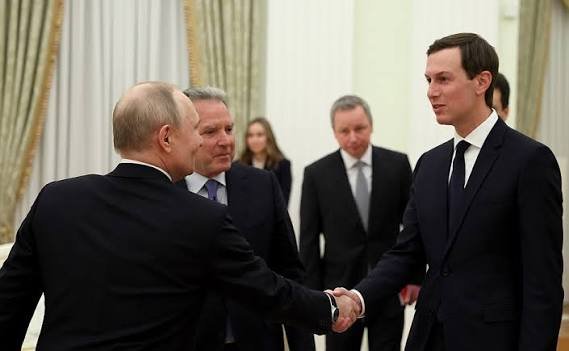
Putin Sits With Kushner And Witkoff In Moscow As Gulf Tensions Threaten To Overshadow Talks

By Asiwaju Adekunle Saheed Russian President Vladimir Putin met United States envoys Jared Kushner and Steve Witkoff in Moscow, a high profile engagement that came as Russia announced a 72 hour pause on strikes against Kyiv to allow room for peace talks, raising cautious optimism about a possible ceasefire in the Ukraine war. In the Gulf, however, tensions escalated sharply after the United States military destroyed three Iranian oil tankers following missile attacks on its warships, with Tehran vowing retaliation in response to the strikes. The twin developments have placed global diplomacy under strain, with attention split between the fragile progress in Moscow and the rapidly deteriorating standoff between Washington and Tehran. In Nepal, the flood death toll has risen to 1,344, with thousands still missing more than a week after the disaster struck, even as rescuers managed to pull survivors alive ten days later in a rare moment of hope amid the devastation. Separately, Israel confirmed plans to partially withdraw from southern Lebanon, narrowing its so called security zone after weeks of clashes, a move that could signal a modest de escalation in that theatre even as other global flashpoints intensify. Diplomats say the coming days will be critical in determining whether the Moscow talks can produce concrete results before the Gulf crisis draws greater international attention.

Continue Reading

Moscow Talks Offer A Flicker Of Peace As Washington Strikes Iranian Tankers In The Gulf

By Asiwaju Adekunle Saheed Global attention has shifted sharply following Russia’s announcement of a 72 hour pause on strikes against Kyiv, timed with the arrival of United States envoys in Moscow for peace talks that have raised cautious optimism about a possible ceasefire in the Ukraine war. At the same time, the United States military confirmed airstrikes on three Iranian oil tankers, carried out after missile attacks targeted its warships in the Gulf, with Washington describing the strikes as defensive measures even as Tehran vowed retaliation. The twin developments have placed the world’s attention on two separate flashpoints at once, with diplomats and analysts closely watching whether the Moscow talks can hold amid rising tension in the Gulf. In Nepal, rescuers pulled survivors alive ten days after devastating floods swept through the region, a rare and welcome moment of hope amid what has otherwise been widespread destruction and loss. Relief agencies say thousands remain displaced by the disaster, with humanitarian efforts continuing as authorities work to reach communities still cut off by the flooding. International observers caution that while the talks in Moscow could ease tensions in Eastern Europe, the escalating standoff between Washington and Tehran risks overshadowing any diplomatic progress made this week.

Continue Reading