The Curtain Falls on Ogogo: Nollywood Mourns a Legend Who Fought Till the End
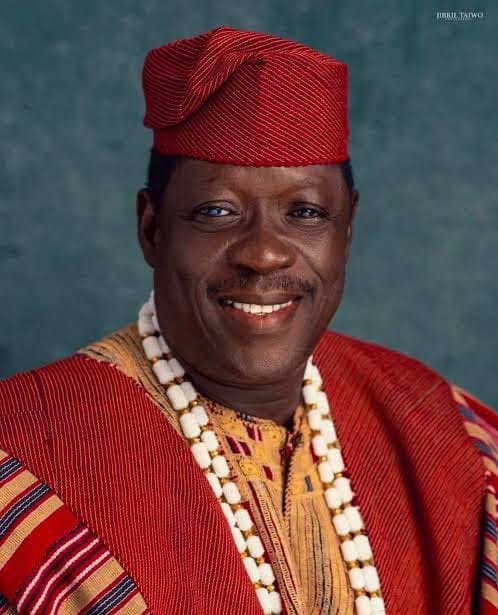
Nigeria’s film industry is in mourning following the death of veteran Yoruba actor Taiwo Hassan, fondly known to millions as Ogogo, who passed away at the age of 66 after a brief but fierce battle with stage four cancer. His colleague, elder statesman of Nollywood Jide Kosoko, confirmed the sad news in an emotional post on Sunday, August 23, 2026, announcing that Ogogo died at 3pm that day. The news did not come without warning, though it still landed like a gut punch to fans across the country. Just a week earlier, on August 17, a heartbreaking video from Ogogo’s daughter, Kira Taiwo, had gone viral, showing the young woman in tears as she pleaded with the public for help finding treatment for her father, whose condition she described as very bad. In the video, Kira explained that several hospitals had turned her father away, unable or unwilling to continue treatment, and she was reaching out in desperation, not for money, but for anyone who might know a facility capable of saving him. According to Kira, the diagnosis had only come about three weeks before that video, meaning the family had barely had time to process the news before the disease had already advanced to a life threatening stage. She described her father as a man of remarkable will, someone whose strength made it nearly impossible to tell, just by looking at him, that anything was wrong until the illness began to show itself. That contrast, between the fighter fans knew on screen and the frail reality behind closed doors, made the final days especially painful for those who loved him. Ogogo’s death caps a career spanning more than four decades in Nollywood, one built on a screen presence so distinctive it birthed its own street slang. Fans coined the phrase Action Po bi Ogogo, loosely translated as Action Plenty like Ogogo, a tribute to the raw physicality and commanding aura he brought to every role. His breakout came with the 1996 classic Owo Blow, directed by Tade Ogidan, a film that cemented his status as one of Yoruba cinema’s most recognisable faces and gave Nigerian pop culture one of its most quoted lines, Na All of Us Go Chop Breakfast, a phrase that still lives on as everyday slang decades later. Behind the larger than life screen persona was a man shaped by an unusual family history. Ogogo was born into a lineage defined by twins, with his forefather, his father and even his own siblings all part of twin births, his mother having delivered twins on four separate occasions. Of thirteen children born to his parents, only three survived, and Ogogo was the last of his parents’ twin children to pass. He was also a trained boxer, a discipline that likely informed the physicality he brought to his acting, and he battled a chronic ulcer condition for six to seven years earlier in life, an illness that had nearly claimed him long before the cancer diagnosis. Tributes have poured in from across the Nollywood community, with Yinka Quadri, described by Ogogo himself as a friend he never loved as deeply as any other colleague, among those mourning the loss most personally. Kosoko, who worked alongside Ogogo on numerous productions over the years, confirmed that his remains would be taken to his hometown of Ilaro, Ogun State, with the Laying in State Ceremony scheduled for Monday, August 24, 2026, allowing family, friends and fans across the region to pay their final respects. Ogogo leaves behind a body of work stretching over 300 films, a legacy of a career built not on shortcuts but on decades of consistent, memorable performances that shaped an entire generation’s idea of what Yoruba cinema could be. For an industry that has weathered its share of losses in recent years, his passing is another painful reminder of how quickly illness can take even its most vital figures, and how urgently conversations about access to specialised cancer treatment in Nigeria still need to be had. What Ogogo’s life teaches us Beyond the tributes and the tears, Ogogo’s story leaves behind lessons that outlast any single film role. His boxer’s discipline, carried quietly into every performance, is a reminder that mastery in one craft can sharpen excellence in another, and that the physical commitment he brought to acting was never accidental but earned through years of training and repetition. His decades long battle with chronic ulcer, endured largely outside the public eye, speaks to a generation of Nigerian entertainers who worked through pain rather than let it define their output, a quiet resilience younger actors would do well to study rather than romanticise. His industry legacy is equally instructive. Ogogo did not build a following through scandal or shortcuts but through consistency, appearing in over 300 films across four decades, a body of work that shows longevity in Nollywood is possible when talent is paired with discipline and respect for craft. The slang his roles inspired, Action Po bi Ogogo, is proof that genuine screen presence, built patiently over time, can outlive trends and become part of a culture’s everyday language, a reach few actors ever achieve. Perhaps the most human lesson comes from his final weeks. His daughter’s public plea for help, and the outpouring of concern it triggered across the industry, underscored something Nollywood does not always get credit for, a real sense of community among colleagues who prayed, reached out and rallied around one of their own in crisis. That solidarity, more than any single film, may be the truest measure of the industry Ogogo helped shape, one where fame did not erase the bonds of friendship and shared struggle among its own. By Asiwaju Adekunle Saheed
Continue Reading